




 How can I assist you?
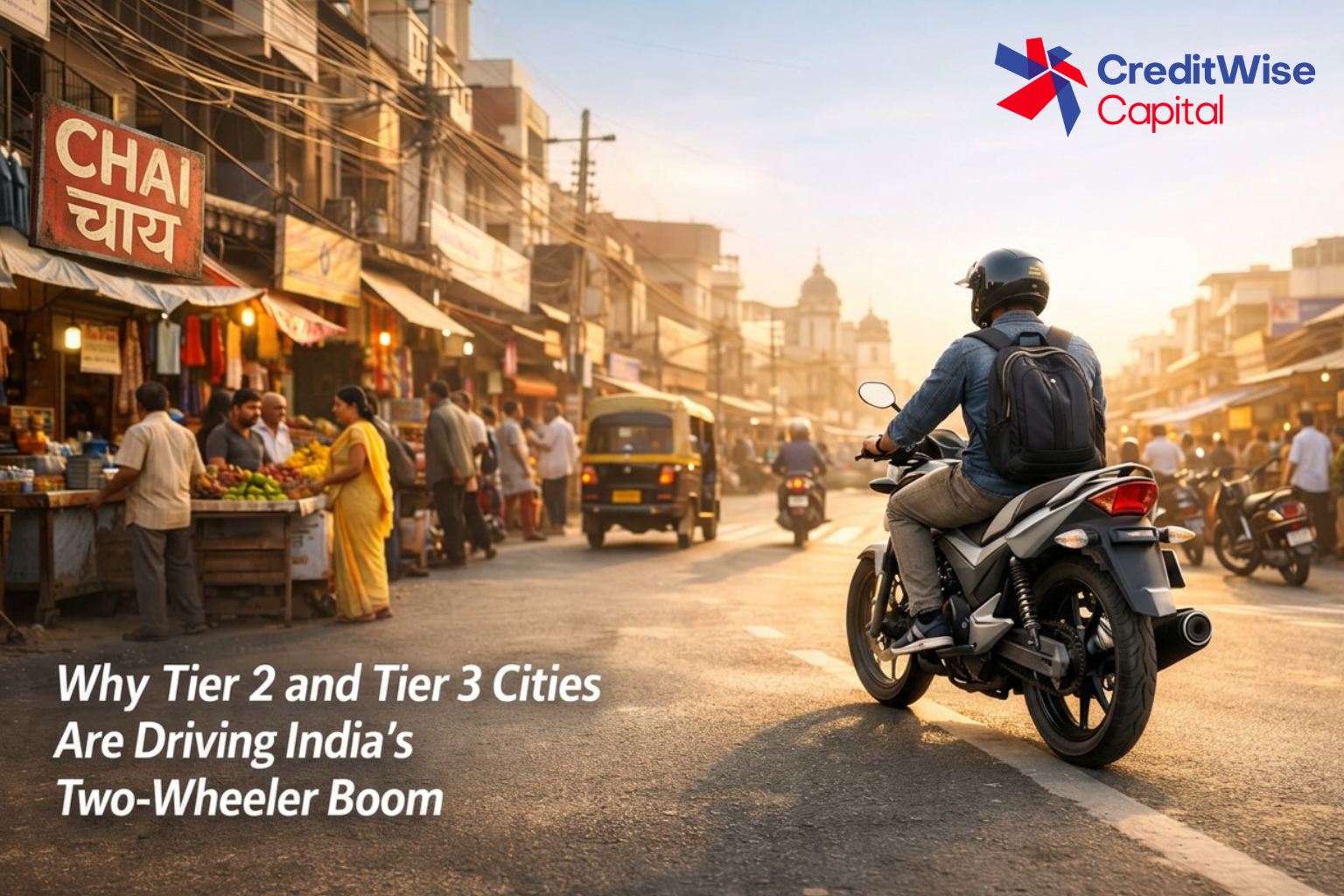
The Scale of India’s Two-Wheeler Market Growth
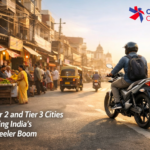
India is the largest two-wheeler market in the world by volume, and a growing share of that volume is being driven from beyond the major metros. According to data from the Society of Indian Automobile Manufacturers (SIAM), two-wheeler sales in India have consistently crossed the 15 million unit mark annually in recent years, with rural and semi-urban markets accounting for a substantial and increasing proportion of total sales.
The reasons are structural rather than coincidental. Tier 2 and Tier 3 cities are experiencing a convergence of factors – rising disposable incomes, expanding road networks, limited public transport infrastructure, and growing aspirations among younger populations, that together make two-wheeler ownership both practical and desirable. Unlike metros where public transport is more developed, residents of smaller cities often have no reliable alternative to a personal vehicle for daily commuting.
Rising Incomes and Expanding Aspirations in Smaller Cities
Economic development in India has not been confined to its largest cities. Government investment in infrastructure, the expansion of manufacturing hubs, and the growth of small and medium enterprises have created new employment opportunities across Tier 2 and Tier 3 towns. Cities such as Indore, Coimbatore, Nagpur, Rajkot, and Lucknow have seen meaningful increases in average household income over the past several years.
This income growth has directly translated into higher consumer spending, with two-wheelers being among the first discretionary purchases that upwardly mobile households make. A two-wheeler represents independence, productivity, and social mobility in these markets. For a young professional in a city like Nashik or Bhopal, owning a motorcycle or scooter is not a luxury. It is a practical necessity that enables employment, education, and daily life.
The Role of a Young and Aspirational Population
India’s demographic profile plays a significant role in this story. A large proportion of the population in Tier 2 and Tier 3 cities falls within the 18 to 35 age group, a segment that is digitally connected, financially aware, and keen to establish financial independence early. Many of these individuals are first-time borrowers seeking their first vehicle and, often, their first loan. Their willingness to engage with formal credit channels has opened a large and underserved market for lenders, particularly non-banking financial companies.
Why Public Transport Gaps Are Accelerating Two-Wheeler Demand
One of the most straightforward explanations for the two-wheeler boom in smaller cities is the absence of adequate public transport. Metro rail networks, reliable bus rapid transit systems, and app-based cab services that are commonplace in large cities remain limited or entirely absent in most Tier 2 and Tier 3 towns.
For a factory worker in Aurangabad, a school teacher in Tiruppur, or a shopkeeper in Siliguri, a two-wheeler is the most efficient and economical way to travel. It reduces commute times, eliminates dependence on irregular public transport, and pays for itself through savings on daily travel costs. This practical utility sustains consistent demand for two-wheelers regardless of broader economic cycles, making the segment remarkably resilient.
How Two-Wheeler Loans in Small Cities Are Making Ownership Accessible
Ownership aspirations alone do not drive sales. Access to affordable financing is the critical enabler that converts demand into actual purchases. Historically, residents of smaller towns faced significant barriers when seeking vehicle loans from traditional banks, including stringent eligibility criteria, physical branch requirements, slow processing times, and a reluctance to extend credit to first-time borrowers or those with limited credit histories.
This gap has been systematically addressed by non-banking financial companies operating in the vehicle finance space. NBFCs have developed lending models specifically suited to the realities of smaller city borrowers, including flexible income assessment, digital verification processes, and faster approval timelines. Two-wheeler financing in India has become meaningfully more accessible as a result, and this accessibility is a direct contributor to the sales boom being witnessed across smaller markets.
Digital Lending Is Removing Geographical Barriers
The digitisation of the lending process has been particularly transformative for small-town borrowers. Applicants no longer need to visit a branch, submit physical documents, or wait weeks for a decision. Aadhaar-based KYC, DigiLocker verification, and automated credit assessment have made it possible to apply for and receive a loan decision from anywhere in the country.
For a borrower in a Tier 3 town who previously had no access to formal vehicle finance, this represents a fundamental change. Digital lending platforms have effectively eliminated the geographical disadvantage that once made credit inaccessible in smaller cities, bringing the same quality of service to a resident of a small town that was previously available only in large urban centres.
The NBFC Advantage in Tier 2 and Tier 3 Markets
Non-banking financial companies have played a defining role in the growth of two-wheeler financing across smaller cities and towns. Unlike scheduled commercial banks, which have traditionally concentrated their retail lending operations in urban centres, NBFCs have built distribution networks and underwriting capabilities specifically designed for semi-urban and rural markets.
NBFCs are regulated by the Reserve Bank of India and operate within a well-defined framework that protects borrowers while enabling lenders to serve a broader population. Their ability to assess creditworthiness using alternative data points, process applications digitally, and offer products tailored to the income patterns of smaller city borrowers has made them the preferred financing partner for millions of two-wheeler buyers across India. According to RBI data, NBFCs account for a significant share of vehicle loans disbursed in India, with their presence particularly pronounced in markets outside the top eight metropolitan cities.
Infrastructure Development Is Further Fuelling the Boom
Government investment in road infrastructure under programmes such as the Pradhan Mantri Gram Sadak Yojana and the Bharatmala highway project has significantly improved road connectivity across smaller towns and rural areas. Better roads directly increase the utility and appeal of two-wheeler ownership by making travel safer, faster, and more comfortable.
Improved connectivity also expands the economic geography of smaller cities. As roads improve, residents are able to access employment, education, healthcare, and markets that were previously too distant to reach conveniently. This expansion of accessible opportunity further strengthens the case for personal vehicle ownership and sustains demand for two-wheelers in regions that are seeing infrastructure investment for the first time.
Key Takeaways
- India’s two-wheeler boom in Tier 2 and Tier 3 cities is being driven by a combination of rising incomes, limited public transport, and improved access to formal credit.
- Smaller cities now account for a growing and increasingly significant share of total two-wheeler sales in India.
- NBFCs have played a central role in making two-wheeler loans in small cities accessible by offering digital, flexible, and fast financing solutions.
- The digitisation of the lending process has removed geographical barriers that previously prevented small-town borrowers from accessing formal vehicle finance.
- India’s young demographic profile in Tier 2 and Tier 3 cities is a structural driver of sustained two-wheeler demand.
- Government infrastructure investment is expanding road connectivity and reinforcing the practical value of two-wheeler ownership across smaller markets.
- First-time borrowers in smaller cities now have access to loan products designed specifically for their income profiles and financial circumstances.
Frequently Asked Questions
Why are Tier 2 and Tier 3 cities driving India’s two-wheeler boom?
Tier 2 and Tier 3 cities are experiencing rising household incomes, a growing young working population, and limited public transport infrastructure. These factors together create strong and sustained demand for personal mobility. Two-wheelers offer an affordable, practical, and efficient solution for daily commuting in these markets, making them the vehicle of choice for millions of residents.
Can residents of small towns and Tier 3 cities get a two-wheeler loan easily?
Yes. The expansion of digital lending and the growing presence of NBFCs in smaller markets has made two-wheeler financing significantly more accessible for residents of Tier 2 and Tier 3 cities. Applicants can complete the entire loan application process digitally, without visiting a branch. Eligibility criteria have also been designed to accommodate the income patterns typical of smaller city borrowers.
What documents are required for a two-wheeler loan in a small city?
The standard documents required for a two-wheeler loan include an Aadhaar card for identity and address verification, a PAN card or equivalent KYC document, proof of income such as a salary slip or bank statement, and address proof such as a utility bill or rental agreement. DigiLocker integration allows most of these documents to be verified digitally, simplifying the process considerably.
What is bike loan eligibility for a first-time borrower?
First-time borrowers are evaluated on the basis of their income, identity verification, credit profile, and KYC documentation. Applicants without an existing credit history may still be considered by lenders who use alternative assessment criteria. Maintaining a consistent income record and ensuring all documents are in order significantly improves eligibility for first-time applicants.
How has digital lending changed two-wheeler financing in India?
Digital lending has transformed the vehicle finance experience by eliminating the need for physical branch visits, reducing paperwork, and enabling faster loan decisions. Aadhaar-based verification and DigiLocker integration allow lenders to verify applicant documents in real time. This has been particularly impactful for borrowers in smaller cities and towns who previously had limited access to formal credit channels.
Are NBFCs a reliable option for two-wheeler loans in smaller cities?
NBFCs regulated by the Reserve Bank of India are a reliable and increasingly preferred source of vehicle finance, particularly in markets outside major metropolitan cities. They offer products tailored to the income and documentation profiles of smaller city borrowers, faster processing compared to traditional banks, and a broader physical and digital presence in semi-urban and rural markets.
What is the outlook for the two-wheeler market in India’s smaller cities?
The outlook remains strong. Continued infrastructure development, rising incomes, a growing young workforce, and expanding access to digital financial services are all structural tailwinds that will sustain two-wheeler demand in Tier 2 and Tier 3 cities for the foreseeable future. Industry analysts and market data consistently point to smaller cities as the primary growth frontier for India’s automobile sector.
Conclusion
The two-wheeler boom in Tier 2 and Tier 3 cities is not a temporary trend. It is the product of deep, structural shifts in India’s economic geography, demographic profile, and financial infrastructure. Rising incomes, limited public transport, improving roads, and accessible two-wheeler financing have together created conditions in which millions of Indians in smaller cities and towns are making the transition to personal vehicle ownership for the first time.
For aspiring two-wheeler owners in smaller cities, the barriers that once made this transition difficult have been substantially reduced. Accessible credit, digital processes, and lenders who understand the realities of smaller markets have made it easier than ever to finance a vehicle and get on the road.
Ready to take the next step? Apply at creditwisecapital.com
Disclaimer
The information in this blog is for general informational purposes only and should not be taken as financial or legal advice. Please conduct your own due diligence before making any financial decision. All loan products offered by Credit Wise Capital are subject to credit assessment, eligibility criteria, and applicable terms and conditions.